Showing posts with label Kuwait. Show all posts
Showing posts with label Kuwait. Show all posts
Thursday, May 5, 2022


Thursday, March 10, 2016
"Looking for Phoenicia Street, 1969" - INDIA CURRENTS (California - March 2016)
Beirut,
then and now. A son looks for where his father had lived and finds other
histories in a haunted present.
It was the year my parents would marry
in Kuwait. In the 1960s, as Goa was annexed by India and the creation of the
Organization of the Petroleum Exporting Countries, or OPEC,
signalled the growth of the oil-based
Middle Eastern economy, many Goans made their
way to the Gulf states due to the rise of employment opportunities there. The
American company my father would be employed by for two decades sent him to
Lebanon as a trainee in 1969, shortly before my mother would join him in Kuwait,
the country where my sister and I would be born.
 Nearly a half-century later, I try to
locate the street on which my dad had worked and lived. He had always
remembered Beirut fondly, a single twenty-something, then, out in the world on
his own for the first time. As a friend and I make our way past the weekend
crowd, enjoying views of the Mediterranean from the Corniche, the January sun glints
off the windows of the towering Phoenician Hotel to our right. “Middle of the
road as you start up on the slope”, my dad had instructed on WhatsApp, in
response to my query of how far his office building might be in relation to the
hotel that shares its name with the street he had called home. On our left, by
the edge of Zaitunay Bay, the once
glamorous St. George Hotel, now hollowed
out, stands mutely as testament to Beirut’s heyday, its Golden Age. Previously
damaged during the civil war, the hotel was the site of the 2005 car-bomb blast
that killed then-Prime Minister Rafik Hariri. A large banner cuts across its
otherwise silent façade like a scream: “Stop Solidere”, it implores, in
reference to the
company at the helm of redeveloping downtown Beirut,
but clearly not without controversy.
Nearly a half-century later, I try to
locate the street on which my dad had worked and lived. He had always
remembered Beirut fondly, a single twenty-something, then, out in the world on
his own for the first time. As a friend and I make our way past the weekend
crowd, enjoying views of the Mediterranean from the Corniche, the January sun glints
off the windows of the towering Phoenician Hotel to our right. “Middle of the
road as you start up on the slope”, my dad had instructed on WhatsApp, in
response to my query of how far his office building might be in relation to the
hotel that shares its name with the street he had called home. On our left, by
the edge of Zaitunay Bay, the once
glamorous St. George Hotel, now hollowed
out, stands mutely as testament to Beirut’s heyday, its Golden Age. Previously
damaged during the civil war, the hotel was the site of the 2005 car-bomb blast
that killed then-Prime Minister Rafik Hariri. A large banner cuts across its
otherwise silent façade like a scream: “Stop Solidere”, it implores, in
reference to the
company at the helm of redeveloping downtown Beirut,
but clearly not without controversy.  As I look for Phoenicia
Street, its name recalling this country’s even more distant legendary past, I
cannot help but think of that mythical bird reborn of the ashes, and wonder about
Beirut’s future, its present so at odds with my father’s recollection of his
youthful years in the city. In the midst of growing political instability,
Syrians and Palestinians continue to seek refuge in Lebanon, these contemporary
crises of displacement layered on already uncertain ground. ISIS, the Israeli
occupation, and then the November
2015 bombing in southern Beirut
that was eclipsed by news of the Paris
attacks that same month. Refugee crises
have fast become the most apparent political problem of this second decade of
the 21st century, especially as many nations, such as Australia,
have balked at taking in the world’s homeless. Yet, ironically, Lebanon has been
the shelter of its politically displaced neighbours while dealing with its own
instability.
As I look for Phoenicia
Street, its name recalling this country’s even more distant legendary past, I
cannot help but think of that mythical bird reborn of the ashes, and wonder about
Beirut’s future, its present so at odds with my father’s recollection of his
youthful years in the city. In the midst of growing political instability,
Syrians and Palestinians continue to seek refuge in Lebanon, these contemporary
crises of displacement layered on already uncertain ground. ISIS, the Israeli
occupation, and then the November
2015 bombing in southern Beirut
that was eclipsed by news of the Paris
attacks that same month. Refugee crises
have fast become the most apparent political problem of this second decade of
the 21st century, especially as many nations, such as Australia,
have balked at taking in the world’s homeless. Yet, ironically, Lebanon has been
the shelter of its politically displaced neighbours while dealing with its own
instability. On another day, a young boy follows
me as I walk over to Café Younis in Hamra where I was to meet some friends.
When my father lived here, this was one of his haunts. He would frequent its
cafes with friends he had made from all over the Middle East and other parts of
the globe. “Syrian, Syrian”, the lad said, attempting to catch my attention.
“Hungry”, he whispered, a shoeshine box in one hand. The vibrant multicultural city
was once known as the Paris of the East. Now, its cosmopolitanness is bred from
other causes. It is with these lines that the seminal postcolonial text Orientalism (1978) opens: “On a visit to
Beirut during the terrible civil war of 1975-1976 a French journalist wrote
regretfully of the gutted downtown that
‘it had once seemed to belong to . . . the Orient of Chateaubriand and Nerval.’
He was right about the place, of course, especially so far as a European was
concerned. The Orient was almost a European invention, and had been since
antiquity…” Even as he exemplifies the Beirut of
the past as the epitome of how the West imagines the East, the late Palestinian
American writer Edward Said captures the ephemerality of a city lost, one still
immersed in its own pain.
On another day, a young boy follows
me as I walk over to Café Younis in Hamra where I was to meet some friends.
When my father lived here, this was one of his haunts. He would frequent its
cafes with friends he had made from all over the Middle East and other parts of
the globe. “Syrian, Syrian”, the lad said, attempting to catch my attention.
“Hungry”, he whispered, a shoeshine box in one hand. The vibrant multicultural city
was once known as the Paris of the East. Now, its cosmopolitanness is bred from
other causes. It is with these lines that the seminal postcolonial text Orientalism (1978) opens: “On a visit to
Beirut during the terrible civil war of 1975-1976 a French journalist wrote
regretfully of the gutted downtown that
‘it had once seemed to belong to . . . the Orient of Chateaubriand and Nerval.’
He was right about the place, of course, especially so far as a European was
concerned. The Orient was almost a European invention, and had been since
antiquity…” Even as he exemplifies the Beirut of
the past as the epitome of how the West imagines the East, the late Palestinian
American writer Edward Said captures the ephemerality of a city lost, one still
immersed in its own pain.  Of the impossibility of knowing
these ghosts in the way only the haunted can, Said goes on to say, “Perhaps it seemed irrelevant that Orientals themselves
had something at stake in the process, that even in the time of Chateaubriand
and Nerval Orientals had lived there, and that now it was they who were suffering…”
As if in illustration of Said’s observation of the juxtaposition of the
fantastic past with the tumultuous present, the former somehow made more
cognizable than the critical nature of reality, in the erstwhile Phoenician
city of Tyre,
millennia-old ruins stand monumentally in South Lebanon, almost rendering
invisible the neighboring Palestinian refugee camp of modern provenance.
Of the impossibility of knowing
these ghosts in the way only the haunted can, Said goes on to say, “Perhaps it seemed irrelevant that Orientals themselves
had something at stake in the process, that even in the time of Chateaubriand
and Nerval Orientals had lived there, and that now it was they who were suffering…”
As if in illustration of Said’s observation of the juxtaposition of the
fantastic past with the tumultuous present, the former somehow made more
cognizable than the critical nature of reality, in the erstwhile Phoenician
city of Tyre,
millennia-old ruins stand monumentally in South Lebanon, almost rendering
invisible the neighboring Palestinian refugee camp of modern provenance.
 In Beirut city,
amidst the newly rising buildings, there are creative signs of dissent. A
stencil of an Anonymous mask on one wall, flowers bursting out of a rifle held
by a gunman on another. As I wonder how long these bold displays of public art
might last, I continue to confer with my dad who is in Goa. “There was a coffee
shop outside”, he advises via messenger, attempting to orientate me. But the
company building seems to be non-existent. I ask a few locals. No one has heard
of it. I look around to see newer buildings, their silhouettes sharply
contrasting with the older architecture of the 60s and 70s, invariably
pock-marked with evidence of the civil war. A few blocks further, the ravaged Holiday Inn of the infamous “battle of the hotels” looms
inhospitably. “I saw it go up in flames from my balcony”, a Lebanese American
friend later finds occasion to convey when we talk about my trip and memories
of her childhood. “My landlady must be dead by now. She was in her 60s, then”,
dad tells me on the phone when we speak. He had also tried to contact a
Lebanese friend he knew to show me around, only to discover that the man and
his family were long gone. I had found Phoenicia Street, but it was no longer
1969.
In Beirut city,
amidst the newly rising buildings, there are creative signs of dissent. A
stencil of an Anonymous mask on one wall, flowers bursting out of a rifle held
by a gunman on another. As I wonder how long these bold displays of public art
might last, I continue to confer with my dad who is in Goa. “There was a coffee
shop outside”, he advises via messenger, attempting to orientate me. But the
company building seems to be non-existent. I ask a few locals. No one has heard
of it. I look around to see newer buildings, their silhouettes sharply
contrasting with the older architecture of the 60s and 70s, invariably
pock-marked with evidence of the civil war. A few blocks further, the ravaged Holiday Inn of the infamous “battle of the hotels” looms
inhospitably. “I saw it go up in flames from my balcony”, a Lebanese American
friend later finds occasion to convey when we talk about my trip and memories
of her childhood. “My landlady must be dead by now. She was in her 60s, then”,
dad tells me on the phone when we speak. He had also tried to contact a
Lebanese friend he knew to show me around, only to discover that the man and
his family were long gone. I had found Phoenicia Street, but it was no longer
1969.
From India Currents. Another version also appears in The Goan.

Saturday, February 20, 2016
"The Lost Generation: 1990" - THE GOAN: I'm Not Here (21 February 2016)
Is
it still home if it no longer exists? Reflecting on Goan history through the
memory of expulsion, the writer asks if it is ever possible to recover what was
lost.
 My father sends me an image over
WhatsApp. “Tony took this photo,” he explains. “Do you recognize it?” I squint
to decipher what it is I’m supposed to see in the tiny picture on my phone. The
photograph, taken from the inside of a car, is mostly subsumed by the rear-view
mirror, with towering skyscrapers in the backdrop, reaching into the sun which
reflects blindingly off their mirror-like exteriors. “You see the small
building?” dad coaxes. And then I notice it, a miniscule boxy structure,
dwarfed by the high-rise modernity around it. “That’s where you grew up.”
My father sends me an image over
WhatsApp. “Tony took this photo,” he explains. “Do you recognize it?” I squint
to decipher what it is I’m supposed to see in the tiny picture on my phone. The
photograph, taken from the inside of a car, is mostly subsumed by the rear-view
mirror, with towering skyscrapers in the backdrop, reaching into the sun which
reflects blindingly off their mirror-like exteriors. “You see the small
building?” dad coaxes. And then I notice it, a miniscule boxy structure,
dwarfed by the high-rise modernity around it. “That’s where you grew up.”
Even now, Kuwait will catch me unawares.
I’ve been struck by how many times in the last few weeks mention of the place
has come up. While I was in Beirut last month for a conference, I met several
Arabs who, while not Kuwaiti, had been born in Kuwait, just like me, my sister,
and my cousins. We reminisced about our childhoods, our recollections of
school, the Hungry Bunny jingle on TV, and going to Entertainment City – the
amusement park. Pieces of the past come back to me from the dim fog of juvenile
memory. But it is also evident to me that more than twenty five years since the
Iraqi invasion and the ensuing Gulf War, there has been a collective recall of
that time and place in the contemporary moment. Note the January release of the
Indian film Airlift (2016), which
chronicles the Indian government’s evacuation of expatriates from Kuwait during
the invasion – the largest of its kind by a civilian air carrier in history. Sure,
it’s not the first time that 1990 has returned to remind us of its impact; Al Jazeera has often run stories about
that year, such as their series “Kuwait:
Class of 1990” (29 July, 2015). “The
occupation of Kuwait may have only lasted seven months, but the memory of
it remains strong, not least in the minds of the children of that conflict,”
the lead piece in the sequence muses.
Neither my family nor I had been in
Kuwait when the invasion occurred. My parents had decided to return to Goa the
year before. But in a matter of months, we would be reunited with the many Goan
families we had known in the Gulf state. The war had brought several people I
had grown up with ‘back’ to Goa. We were the lost generation: Goans our entire
lives, suddenly plunged into a foreign place called home. For some, there was
no getting over the culture shock. Like many other ‘Gulfie Goans’ of my
generation, I went abroad to continue my college education. My journey to California
in 1993 called for a change of planes in a country I thought I would never see
again. My non-Kuwaiti blood having disbarred me from being a citizen, I was
only permitted to view my birthplace from the airport. There was war damage
that was still being repaired.

Certainly, I felt a sense of saudades – that Portuguese word adopted
by Goans to explain feelings of loss, yearning, and nostalgia; a word that has
no equivalent in the English language. In his biographical introduction to his
wife Violet Dias Lannoy’s novel, Pears
from the Willow Tree (1989), Richard Lannoy refers to the writer and her
first husband, Behram, as members of the Lost Generation, the fledgling
postcolonial cohort that saw the promise of decolonization rent asunder by
“[t]he communal bloodshed of post-Independence India” (xv). For Dias Lannoy,
this shattered promise reverberated in the Indian annexation of Goa, much to
her shock as an activist-teacher who had worked with Gandhi. In her novel, the
Goan protagonist Seb struggles to find his place in the new country, only to
realize that it can never be his but not for lack of trying. The theme of loss
due to invasion is a recurrent theme in Goan history and that of its diaspora.
Much like the expulsion from Kuwait, many generations of Goans remember the
exodus from Burma when Japanese forces occupied the region during World War II.
My attempts to write about my childhood
in Kuwait often feel like they meet with failure – the lost words of a lost
generation. In this recovery effort, I am reminded of a photograph in my aunt’s
home in Miramar. “It is nowhere,” she responds puzzlingly to my query of the
image’s provenance. “We lost our albums during the invasion. I had no photos of
me and uncle. Your cousin recreated this one from two separate pictures.” The
collage is proof of the past, much like the image of my childhood home proves
it still exists. Even so, is it the place I remember?
From The Goan.
Monday, June 23, 2014
"Some Other Country" - INDIA CURRENTS (California - June 2014)
Night had fallen on Melbourne by the time I had gotten
through immigration and customs. I made my

Sure, I had found myself in this same situation many
times before. But it never ceases to feel daunting, that alienness of being on
the precipice of starting life anew. En route to Australia, I broke my journey
in Beirut. At immigration in Lebanon, I surmised that the officer was asking me
if I spoke Arabic, but being unable to respond in that tongue, I apologized in
English. “How come?” He interrogated. “You were born in Kuwait,” he said,
jabbing his finger at the tell-tale information in my American passport.

Just a few weeks prior, the moustachioed official collecting
departure cards at Bombay’s Chhatrapati Shivaji International Airport – which
will always be Sahar Airport to me from my childhood memories of transiting
through there between Kuwait and Goa to see my grandmother – insisted on
speaking to me in Hindi. As if to go with the nationalistically inclined name
change of the airport, he questioned my inability to articulate myself fluently
in “the mother tongue” that is completely unknown to my mother who was born and
raised in East Africa. Waving my Overseas Citizenship of India card in my face,
he chastised me, in Hindi, for not speaking the language of “your country.” I
thought of the title of that novel, the one in which James Baldwin writes, “The aim of the dreamer, after
all, is merely to go on dreaming and not to be molested by the world. His dreams are his protection against the world.” I
thought of 1961, the year in which Goa ceased being Estado da Índia Portuguesa and, without the benefit of a
local referendum to ascertain the will of its people, was handed over to India some fourteen years after a certain “Tryst with
Destiny.” I signed my Portuguese name on the exit form, and departed the
country that neither of my parents, nor I, had been born in.
“It’s not just another country for you,” a friend
remarked. “It’s a whole other continent.” Nonetheless, some things were
immediately familiar, I thought to myself as I prepared the cash to pay the
taxi

There was an awkward silence when the cab driver
finally ended the call he had been on from the time he had picked me up. I had
gathered from the phone conversation that he was Punjabi. “How long have you
lived here?” I enquired. “Ten years.” After another protracted pause, he asked,
“You’re here for work?” I nodded. “Yes. New job.” He said, “Good, good.” Leaning
forward in my seat, I queried, “So, some years ago, there were those attacks,
no? On Indian students… Some were murdered?” His head bobbed in assent. “But it
is safe. You know… just mind your own business. You do your work and you go
home after and everything will be fine.”
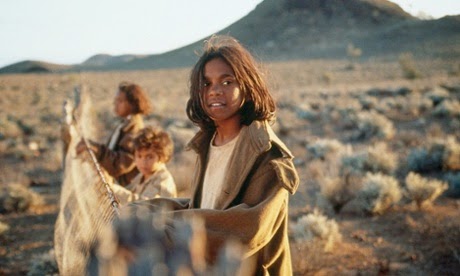
I thought about whose home this country really is and
I thought of homelessness. I thought of 1869 and the ironically named
Aboriginal Protection Act, which led to the Stolen Generations of
state-abducted indigenous children. I thought of Doris Pilkington’s Follow the Rabbit Proof Fence, which was
turned into a film and tells the story of just such Aboriginal children who had
been taken away from their families. I thought of the earliest South Asians to
come to this country, the so called “Afghans” who served as cameleers in the
1860s, transporting goods across Australia’s deserts - Muslim men who married
into Aboriginal communities. I thought of the migrant who goes everywhere and
belongs nowhere. “This is your stop,” the driver announced as he slowed down. “All
the best!”
This article appears in the June 2014 issue of India Currents. A shorter version of it can be read in The Goan.
Tuesday, December 31, 2013
"The Difference between Deserts and Beaches: Sands of a Goan Childhood" - SEMANA DE CULTURA (Goa - 2013)

“Hindi! Hindi! HINDI!” he
kept saying, his voice escalating with each utterance. The Arab lad was, at
most, a year or two older than me. I was sitting on a chair, hands firmly
gripping its sides, paralysed. I was not scared. Even now, I know that what I
felt course through my four-year-old body, like a red hot fever, was shame. The
boy ran out of the store when the adults entered. I felt a wave of relief wash
over me as I saw my father come in with the proprietor. But something changed
for me that day, and there was no going back. On the ride home, I did not utter
a word of what had happened. I was different. And different was not good.
I
would accompany my dad on his work visits to the little shops and grocery
stores around Kuwait City, on occasion. He worked for an American company that
would send him out to service cash registers around town. I would have to go
along if I had the day off from school. There were times when it was fun: the
shopkeepers would bestow a fistful of candy on me. Other times, my dad would
instruct me to sit still while he finished his work. I would be bored out of my
skull, waiting and waiting for him to wrap up the repairs. Playing outside in
the scorching heat and away from parental supervision was out of the question.
It was the 1970s. There was not then the plethora of digital paraphernalia to
keep a middle class child occupied, and I was yet to discover the joy of books.
At
Carmel School, I was one of hundreds of Goan children. It described itself as
an Indian Catholic institution, and was run by nuns. My teachers were of
various South Asian ethnicities, including Malayali, Singhalese, and Goan. The
only non-subcontinental instructor I can recall having was my first Arabic
teacher. Sure, there were other communities that made up Kuwait’s large
international work force where the natives themselves were a minority. Paths
crossed in personal interactions, but they were the exception. It could have
been segregation by design, or sticking close to the familiarity of one’s own
while trying to get by in a foreign land. Or both.
 Mom
knew a Filipina seamstress whom she had sew a pink dress for my sister’s
birthday, one year. When she came by to make alterations, she would fill my
mother in on the latest goings on among her circle of friends. Some of them
were maids in dire circumstances. They were looking for new employers, because
they were unhappy with their current situation and could not stay in the
country without a sponsor. Did my mom know if one of her Kuwaiti bosses was
looking to hire, she would ask. There was the Yemeni caretaker responsible for
the upkeep of the complex we lived in. He had a small room outside our
building, which was one of a pair of twin blocks of flats. My parents once
requested him to have me wait at his place after school because they would both
be late from work. He sat me down on the rugs on the floor in his room among
his friends, and I felt rather grown up as we sipped hot black tea from petite
glasses in which sugar cubes, piled high, were slowly dissolving. From video
footage my cousin shot on his visit to Kuwait last year, I was surprised to see
that the flats in which I had spent my childhood still stood. They were dwarfed
by tall skyscrapers of glass that blindingly reflected the sun.
Mom
knew a Filipina seamstress whom she had sew a pink dress for my sister’s
birthday, one year. When she came by to make alterations, she would fill my
mother in on the latest goings on among her circle of friends. Some of them
were maids in dire circumstances. They were looking for new employers, because
they were unhappy with their current situation and could not stay in the
country without a sponsor. Did my mom know if one of her Kuwaiti bosses was
looking to hire, she would ask. There was the Yemeni caretaker responsible for
the upkeep of the complex we lived in. He had a small room outside our
building, which was one of a pair of twin blocks of flats. My parents once
requested him to have me wait at his place after school because they would both
be late from work. He sat me down on the rugs on the floor in his room among
his friends, and I felt rather grown up as we sipped hot black tea from petite
glasses in which sugar cubes, piled high, were slowly dissolving. From video
footage my cousin shot on his visit to Kuwait last year, I was surprised to see
that the flats in which I had spent my childhood still stood. They were dwarfed
by tall skyscrapers of glass that blindingly reflected the sun.
Surrounded
by Kuwait’s diversity, I knew I was Goan, because what else could I be
ensconced as I was within a cocoon of community institutions in the tiny
Arabian desert kingdom. A liberal dose of prejudice also helped craft my burgeoning
cultural insularity. No, you’re not like Nabil (the boy who lived next door);
yes, Nabil’s family are Christian, but they’re not Catholic and they’re Pakistani, I was instructed.
Maria is Goan, true, but she’s a maid; yes, Filipinas are Catholics as well
but, no, a Goan maid would be a better employee, I was taught to decipher. Mangaloreans
were a tricky lot, I came to learn, what with their ‘Goan Catholic’ names and
Konkani-speaking ability but, no, they were also not like us... Between being
surrounded by Goan classmates at school and attending Catechism classes with
some of those same little people at Holy Family Church on Fridays, which is
when Sabbath services were held to coincide with the weekly holiday, being Goan
in Kuwait was just about as commonplace as hating the fact that there was but a
brief hour of cartoons to watch on television.
There
was only one channel. Because it carried programming in Arabic, English, and
the occasional screening of a Bollywood film, there was no guarantee that even
that hour of children’s programming was sacrosanct, as it was sometimes
interrupted by the call to prayer or breaking news. Sandstorms periodically
wreaked havoc on transmissions, delivering static instead of Tom and Jerry. Having
waited all day for it, there was one time when I was so disappointed at my
favourite show being suspended because of a signal failure that I attacked the
television with a long-handled broomstick. It was a good thing that our
miniscule black and white CRT set had a glass screen as thick as Sheldon
Cooper’s sarcasm – both inescapably bad television.
That
scarring moment in the shop when my difference was pointed out to me so
unforgettably must have informed my realization that the hole at the top of my
nose was something I was not supposed to have. I asked my father about it.
Pointing to the space between my eyes, I whined, “Why do I have this? No one
else does. I don’t want it.” He stopped working on the kitchen cabinet he was
fixing, and smiled. “It’s so that if you got lost, and we have to describe to
people how to find you, we’ll be able to say: ‘He’s the only boy in the entire
world with a hole on his nose!’” No one else in the world, I mused... But my
wonderment was short-lived, and my angst struck again with a vengeance. Looking
at a photograph of myself, I saw the hole again as if for the first time. It
was staring back at me – dead centre like a third eye between the other two.
This time, I went to my mother.
 She
looked stricken at my query. “It’s because I was sewing when I was pregnant
with you. They told me not to, but I did anyway. They said that for the first
born I should go home to have the baby. There was an eclipse, and I pricked
myself by accident.” I took in this information with horror. “You mean you
poked me with a needle while I was still inside of you?” I nearly shouted in
disbelief. From the look in her eyes, I realized my mother had never revealed
this incident to anyone else before.
She
looked stricken at my query. “It’s because I was sewing when I was pregnant
with you. They told me not to, but I did anyway. They said that for the first
born I should go home to have the baby. There was an eclipse, and I pricked
myself by accident.” I took in this information with horror. “You mean you
poked me with a needle while I was still inside of you?” I nearly shouted in
disbelief. From the look in her eyes, I realized my mother had never revealed
this incident to anyone else before.
Often
unintentionally, my parents recreated the Goa they knew in our modest flat in
Kuwait. An indescribable smell accosted my olfactory sense, one day, as I
walked in the door after having been dropped off by the school bus. “What is
that?” I enquired of my parents, my nose crinkling at the unfamiliar stench.
“Rice. Goa rice,” they said proudly, my mother ladling a spoon of the
characteristically husk-stained grains onto a plate for me. Not even that
combined look of hurt and horror – like they had been hit in the gut – could
compete with my revulsion. “I don’t want any!” I said before turning on my
heel. My parents let their firstborn brat be hungry that afternoon in retribution
for his cultural betrayal. Even now, when I picture Goa, it is as the verdant
paddy rice fields tended by my grandmother in her village in Aldona, a breeze
caressing the tops of grain-laden stems that sway as stark white egrets take
wing. It makes it all the more peculiar why I still have no palate for rice and
fish curry – that staple diet of my ancestors.

It
is a mystery to me how my folks came into possession of paddy rice so far away
from its origin. But my guess would be that they acquired it from one of those
many ‘uncles’ whom I came to see as part of my extended family. Mostly in
working class professions, they might have been from my father’s village, or
friends of friends. There were ‘shippies,’ or tarvoti, like Uncle John who travelled frequently between Goa,
Kuwait, and other places, stopping by our home while in transit to drop off
some contraband, rice included I suppose. John, who was very fond of me, stands
out in my mind as a kind man who bore more than a passing resemblance to the
then Crown Prince. Sheikh Saad of the Al-Sabah dynasty, rumour had it, was of
mixed race birth. My parents tried to explain to me that I would no longer see
John after we went to visit him in the hospital after many weeks of him having
not come by. I could tell he was in pain though he put on a bright smile when
he saw me. Whenever I saw Prince Saad on the news, thereafter, I secretly hoped
that it was really John who had gone on to assume his alter ego full time. But
I could not square away seeing his mother, clad in black and tearful, being
commiserated with by my parents on the steps outside Holy Family.
My
family was part of the Kuwait Goans Association whose activities included
charitable work and annual events, like the Christmas shindig. More informally,
there were house parties and picnics. Of the latter, one that sticks out was an
excursion that involved a long ride by bus. It was hot and the flies were
merciless, but there was much merriment as songs were sung, sandwiches divvied
up, and cups of cola passed around into which had been swirled miniscule
amounts of precious bootleg liquor. When we arrived at our destination, I was
grateful for the opportunity to finally stretch my legs. The sight that greeted
me was less welcome. For as far I could see, there was nothing but sand. “What is this?” I interrogated, quite
incredulous that this wasteland could be any one’s idea for a good place to
have a picnic. “This is Kuwait,” my father responded cryptically. I had long
given up on trying to understand why adults could never give it to you straight
(except for when you had done something wrong and got caught, and then there
was no stopping their verbosity...).

“Look,
look!” another man standing nearby exclaimed. A few others came over, further
restricting my view of what they were looking at beyond the dunes. “Ah, yes,” someone
said. “Bedouins.” Though I craned my neck, I saw nothing. As I imagine it now,
here were two tribes regarding each other from across the desert sand: the
natives of Kuwait on one end, the Goan migrants on the other. “The day will
come when all this will be a city,” speculated one of the onlookers, breaking
the silence. “Our children will drive on the roads they build through here,” a
woman added. Another pregnant pause followed as I wondered if the adults were
experiencing a collective mirage. Slowly, people peeled away and busied
themselves with setting up for the picnic: tents, food, games, and more. It
ended up being a much better time than I had expected.
A
picnic is also what I recollect as my first memory of Goa at the tail end of
the seventies. I want to say it was on my first visit, but my mother tells me
she had brought me to Goa as an infant, previously. No matter – this was my first
memory of a place that I had heard so much of, but never knew, so it might as
well have been my first time. I remember that family outing to the beach, with
several of our relatives, so well, because I saw a familiar figure lounging on
the sand. Long blond locks, blue eyes, and a loin cloth. I was awestruck. “Mom,
mom!” I gushed. “It’s Jesus!” My mother, simultaneously embarrassed and amused,
joined the party in giggling as she shushed me. The young hippie who was in
earshot laughed too. I was puzzled about what all the fuss was over.
***
Just
before I turned nine, my parents sent me to St. Peter’s School in the hills of
Panchgani, Maharashtra. It had been the European Boys School, formerly. Attending
the institution was my first experience of an India outside Goa. Having planned
an eventual return to their roots, my parents had probably thought it prudent to
culturally acclimate their son beforehand. But the boarding school was trapped
in its own post-Independence identity crisis. It needed to be British enough to
retain the caché of elitism that attracted the well-heeled to have their
children schooled there, but desi enough to cater to the nostalgic requirements
of parents from the diaspora. At the risk of making the comparison, I cannot
help but ponder if the Zanzibar-born Parsi rock star Freddie Mercury, who also
went to St. Peter’s, felt just as out of place there as I did.
My
school holidays were spent either in Kuwait, or with my grandmother in Aldona.
I completed high school in Goa in 1990, joining my family who, by then, had
repatriated from Kuwait. Other than when they had been on vacation, this was
their first time back as fulltime residents after leaving Goa

While
in college in California, I visited a thrift shop where I rummaged through the
used books section and found a copy of The
Rape of Kuwait. I paid twenty five cents for the book – diminutive in size
despite its heavy title. In one go, I consumed it in its entirety: tales of the
marauding invaders who pulled babies out of incubators and who plundered the
land of my beginnings with all the restraint of comic book villains, until the
gallant Americans came to the rescue. Reading about the atrocities, I felt
something course through my teenaged body that I had never felt before – the
red hot fever of nationalism. Jean Sasson’s hastily written book, I learned
later, was part of a huge public relations effort that had been orchestrated to
drum up support for the Persian Gulf War in the United States and around the
world. I believe I ended up donating the book back to the thrift shop.
Last
year, I was awarded a doctoral degree by the University of London for my thesis
on Goan characters in postcolonial and diasporic fiction about displacement. My
academic pursuit, clearly, has mirrored my personal trajectory and that of my
family’s. Often, I think about the confrontation from my childhood in that shop
in Kuwait and of the shame I felt that day. I mull over whether that boy might
still be where I left him. As for the hole on the bridge of my nose – no bigger
than a grain of sand – it is still there but, now, I enjoy it because it is
different.
Subscribe to:
Posts (Atom)