Showing posts with label Portuguese Indian Literature. Show all posts

Friday, July 9, 2021

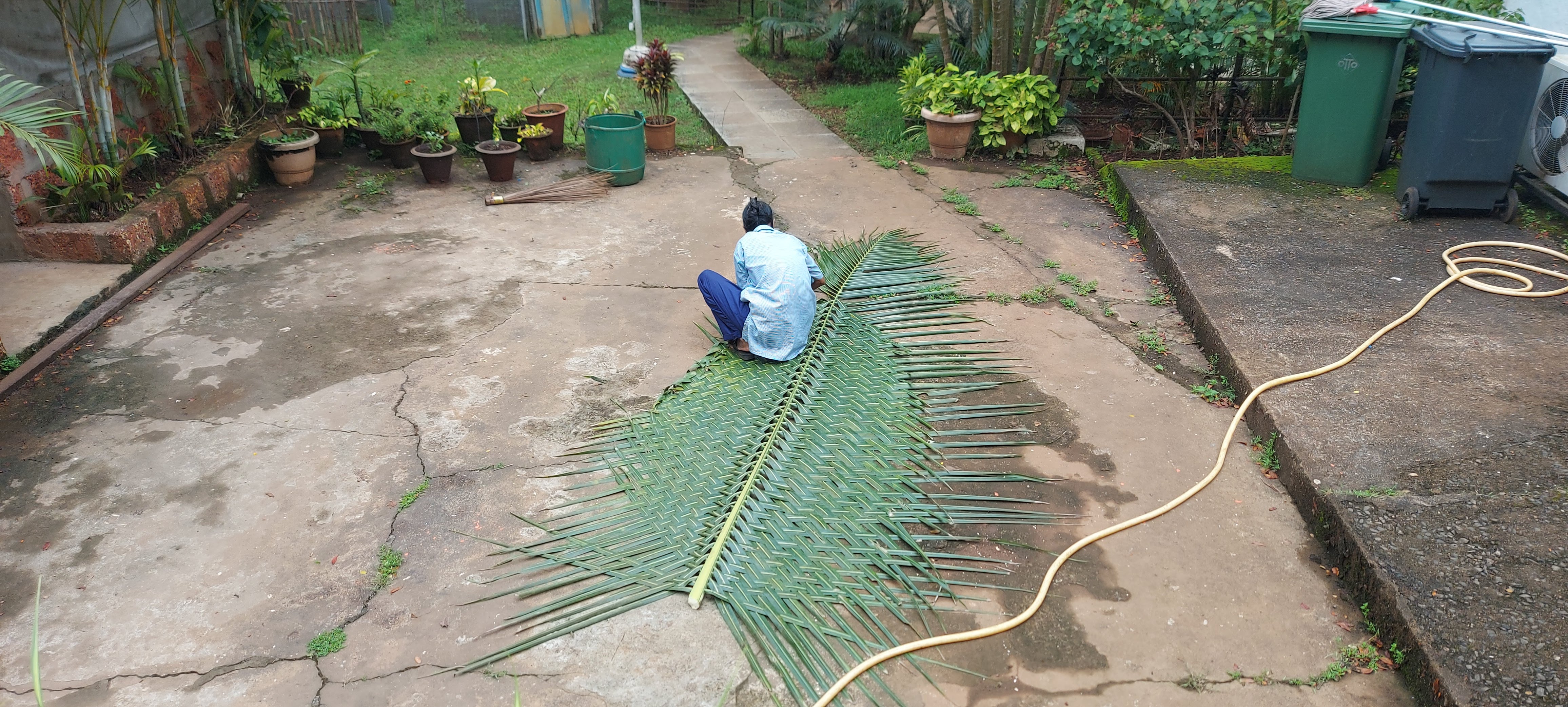
"Colonial and Post-Colonial Goan Literature in Portuguese: Woven Palms" [reviewed] in SOUTH ASIAN REVIEW 42.3 (2021)

As Paul Melo e Castro notes in the introduction, this edited volume takes Goa to be “a product of manifold influences … from both East and West and a global history connected to … the Indian Ocean and beyond” (1-2). Attentive to these confluences, contributors to this book explore Goan literature in Portuguese as the expression and making of Goan identity over the period of Portuguese colonialism and its afterlife in Goa. The primary focus of this volume is literature produced by Goans – both in the colony and the metropole – in the last centuries of Portuguese rule in Goa. Goan literary production in Portuguese tapered off after 1961, the year in which Goa was annexed by the Indian union, ending 451 years of Portuguese colonialism in South Asia. In part, the occlusion of Portuguese in post-annexation Goa occurred due to the region’s “traditions and institutions … [being] largely overlaid and displaced by those of [formerly] British India” (3), bearing witness to the limits of Indian decoloniality. While the book is a formalistic and critical study of literature, its contributors additionally “provide a discontinuous cartography of Goan attitudes to colonial rule and the possibility of escaping its bounds, [as well as] European intellectual currents and changing autochthonous traditions” as encompassed in the written word (4). This underscores the importance of studying Goan writing in Portuguese as a form of South Asian cultural production (by those of such origin who employ(ed) literature to limn the particularities of their homeland) even as that very language places Goa within a pluricontinental Lusophonic network. Accordingly, the book would be of use to postcolonialists and sociologists, scholars of European and Asian literatures and linguistics, and historians of South Asia and Iberia.

In the introduction, and along with Hélder Garmes in a second essay, Melo e Castro makes the case for
redefining Indo-Portuguese literature as Goan Literature in Portuguese, an important consideration of terminology that then allows the region’s canon to be seen as its own autonomous creation. Even as Portuguese colonialism may have given Goan writers its tongue, literature by the Catholic elite – but not exclusively – spoke to local concerns having to do with struggles between South Asian and European world views, caste, religion, internecine conflicts, and other local concerns that stood alongside and sometimes intersected with colonialism. Such specificities at once separated these works from the literature of the Portuguese metropole and, even as they were produced against a colonial backdrop, at times were unrelated to Portuguese colonialism itself. Coincidentally, a subtle strand of analysis in this collection chronicles how the literary works evidence transcolonial linkages across the Lusophone world or between British and Portuguese post/colonialities. Goan literature in Portuguese as a field of study thereby is part of a distinct constellation of worldwide literatures in Portuguese while still being germane to its own regional contexts.

The publication of feuilletons that were borne of, and which evinced, local circumstance further proves the autonomy of the Goan literary scene from its metropolitan counterpart despite the shared use of Portuguese. By the nineteenth century, Goan journalism became a font of literary production that centered on identity-making. Sandra Atáide Lobo takes up the episodic writing of Francisco João da Costa, who published fiction in the local press under the pseudonym GIP. A satirist whose short fiction lampooned how local elites uncritically copied the extravagant habits of the Portuguese, Lobo believes that da Costa’s ultimate purpose for such disparagement was to correct the upper echelon for they could be viewed poorly by (and were setting a bad example for) the rest of Goan society. In contrast, Luís Pedroso de Lima Cabral de Oliveira focuses on how José da Silva Coelho’s law-themed fiction in the press highlights the struggles of non-elite Goans who tried to ascend the social ladder by becoming lawyers. Revealing the restrictions of class and caste in colonial Goa, de Oliveira also uses da Silva Coelho’s writing to show how the under-resourced Portuguese empire deputized inadequately trained local talent to run its provincial affairs. Accordingly, this volume crosses disciplines in demonstrating how literary studies may also apply to other fields like colonial law and sociology.

What may also be made of these Goan literary developments, and the provincial matters they ensconced,
is that they ran parallel with the centrifugal nature of later periods of the Portuguese empire which in its multicontinental fragmentation could not sustain a transcolonial canon of literature even as its numerous literatures were written in the common lingua of the empire. Identifying an effort by the declining Portuguese colonial state to belatedly create a genre titled literatura ultramarine, or the literature of Portugal’s Overseas Provinces, Duarte Drumond Braga reads the oeuvre of once-Portuguese resident Goan multi-genre writer Vimala Devi as evading such attempts. Braga contends that “in claiming a ‘spiritual’, literary and cultural autonomy for Goa,” Devi “[valorizes] … an Indo-Portuguese Goa, albeit not a colonial one” (125-126). Published in Portugal in the aftermath of the Indian annexation of Goa which signaled the demise of the Lusitan empire, Braga regards Devi’s poetry collection Súria (1962) as “a work of exile and an elegy for Goa” that is not devoid of exoticism for “Western consumption” (133). Such awareness notwithstanding, neither Braga nor Cielo G. Festino, who writes about Devi’s short story collection Monção (1963), adequately delve into the question of why Teresa da Piedade de Baptista Almeida, an upper caste Catholic, would give herself the obviously Indic Hindu pseudonym associated with her life’s work. The curiousness of such high caste self-identification would seem to require enquiry given Festino’s honing in on Monção’s representation of the plight of lower caste people in Goa’s feudal agricultural system. 

As forewarned by its title, caste is a major preoccupation of the first Goan novel in Portuguese, Os Brahmanes (1866) by Francisco Luis Gomes. A parliamentarian who represented his native Goa in Portugal, Gomes’ novel is not about Goa. Writing about the novel and its allegorical critique of colonialism in nearby British India (meant to serve as a cautionary tale to the Portuguese), Everton Machado argues that Gomes’ disavowal of colonialism is of that of the British variety, his preference being for the Portuguese version and its championing of equality through Catholicism. Deriving from the laws that gave Goans the same citizenship rights as Portuguese metropolitans – something that was not true for British subjects – Gomes’ position, Machado avers, is an overstatement of the enlightened nature of Portuguese colonialism. Nevertheless, Machado holds that Gomes’ self-identification as a Portuguese person – paralleled by his South Asian characters’ embracing of Christianity – is to only be seen as the “wear[ing] of a ‘white mask’” (50). Here, Machado’s view contravenes the ethos of this volume which draws out multiple yet contradictory aspects of Goan writing in Portuguese (the language) even as it is not Portuguese (the identity of the metropolitan center). Coincidentally, the inherent making of Portuguese identities in a disjointed empire cannot simply be understood as having a single geographic origin nor existing in their multiplicity only as imitation.

Other essays in the book provide broad overviews, as with David K. Jackson’s survey of Goa-related
poetry in Portuguese, while Edith Noronha Melo Furtado inspects women’s writing from the territory in relation to patriarchy. Joana Passos likewise considers gender in her comparative analysis of poetry by Devi in Portuguese and Eunice de Souza in English. Yet, the calling out of gender in these specific contributions about women’s writing sets in relief the lacking intersectional analysis in many of the other essays. For example, M. Filomena de Brito Gomes Rodrigues might have attended to Orlando da Costa’s Sem Flores Nem Coroas (1971) not only as a critique of nationalist patriarchy but also in how it parallels the suppression of women in the domestic sphere of the play. This essay also troublingly states that upon arrival in Goa, the Portuguese found societies that were “more developed than … in Africa” (200). Unlike Rodrigues, Eufemiano Miranda and Melo e Castro successfully spotlight the intersections of gender, caste, religious difference, and regionality in Agostinho Fernandes’ Bodki (1962). Another observation is that, throughout the volume, the unfortunate characterization of women as having “fallen pregnant” makes it sound like they have suffered an affliction.  

While Melo e Castro finds that the discontinuation of the widespread use of Portuguese in Goa has led to literature in that language being understudied, the editor equally calls for scholarly efforts that situate themselves within an ecosystem of Goan literature that includes the Lusophonic as well as the region’s “other major bodies of writing in Konkani, Marathi and English” (5). Funded by the Brazilian project “Pensando Goa” (Thinking Goa), one wonders how this volume and others supported by this scheme might have reached these very goals had they included editors of Goan origin. Inasmuch as the volume under discussion makes the study of Goan writing in Portuguese available to readers in English, thereby expanding the reach of South Asian Lusophonic studies, as Melo e Castro suggests, Lusophone scholars would gain much from post/colonial studies of Goa’s multilingual literary traditions.


Thursday, August 16, 2018

"Melo e Castro, ed. Lengthening Shadows" - A Review in the JOURNAL OF LUSOPHONE STUDIES 2.1 (2017)


In translating and compiling the 45 stories in the double volume Lengthening Shadows, editor Paul Melo e Castro showcases the legacy of the Portuguese short story from erstwhile Goa Portuguesa. Between 1510 and 1961, Goa was the capital of Luso-Asia and the Estado da Índia Portuguesa. For Melo e Castro, the anthology functions as “the autopsy of a dead literature,” focused as it is on a corpus that spans the period between 1864 and 1987 (8). Annexed by India in 1961, the change in Goa’s political identity led to a diminished literary output in Portuguese. The edited volumes thus recall Goa’s literary heritage by tying together Portuguese-language cultural production with Goa’s Portuguese identity. In this, the books are a testament, but their very publication evidences a cultural continuity that cannot be relegated to a bygone era.

Melo e Castro is a lecturer in Portuguese at the University of Leeds, whose scholarly work has centered on  translating and analyzing Portuguese Indian fiction in an array of publications. In addition to his introduction and the translated short stories themselves, Lengthening Shadows also contains an afterword by Augusto Pinto, a cultural and social commentator, and Associate Professor of English at Goa’s S. S. Dempo College of Commerce and Economics. While the former hones in on the aesthetics of the stories and their moment, the latter considers their sociocultural backdrop. 

Though previous collections have compiled Goan Portuguese literature or included Portuguese short stories in translation alongside other works of fiction from Goa, this is the first English language anthology to be published in Goa that is solely dedicated to the Goan short story in Portuguese. Harking back to the publication history of the genre, Melo e Castro acknowledges his debt to Vimala Devi and Manuel de Seabra by titling the anthology with a reference to “the epigraph of … Monção,” Devi’s 1963 short story collection, which borrows from the Sanskrit poet Kālidāsa (54). “Partly this choice is homage to Devi and Manuel de Seabra, who have done more than anyone to preserve and transmit Goa’s Lusophone literary heritage,” Melo e Castro comments (54). Though Devi and de Sabra’s anthological labors are the antecedent for Lengthening Shadows, what Melo e Castro adds is a series of biographical notes about the many writers. These index their personal histories, literary styles, and the periods in which they wrote.

In addition to chronicling publication dates and venues, Melo e Castro also offers formalistic analysis. For instance, in reflecting upon the oeuvre of Luís Manuel Júlio Frederico Gonçalves (1846-1896), Melo e Castro places the writer’s output within the period of Romanticism, the Goan iteration of which occurred in the 1860s, he argues, in contrast with its late eighteenth century European counterpart (10). In exploring Gonçalves’ writing as a product of this literary tradition, not least because the short story “was also a characteristic of Romanticism,” Melo e Castro underscores how Gonçalves and his peers “turn[ed] to Goan settings … An enduring legacy of Romanticism was the attention given to national and local identities…” (10). Signaling the rise of nationalism during this period in Europe, even as Melo e Castro politically links metropole and colony, he highlights the need to expand literary understandings of genre and period. In turn, this advises comprehending the manifestation of European cultures beyond the borders of the continent.

In “The Good Old Bad Days,” Pinto’s afterword to the collection opens with a personal reminiscence: “You could see, hear and smell Goa Portuguesa even as late as 1970. That was the year my parents, along with my nine-year-old self, returned from Kenya to live in our ‘ancestral house’ [in Goa]” (178). Where Melo e Castro surveys Goa’s connections to and differences from Europe in the collected stories, Pinto reveals the region’s other colonial networks and ruminates on its internal ecologies and their effect on Goan literature. As a metacriticism, Pinto says of Lengthening Shadows that it “can be read as a social exposé although … all of the writers are middle or upper-middle class. And most are male, [except] Maria Elsa da Rocha and Vimala Devi ... Also, [excepting] Anantha Rau Sar Dessai and Laxmanrao Sardesai … the [other] writers are Catholic” (183-184).

Pinto explains that these lacunae apart, the collection offers “a better mirror of society than other Indian languages or even English … [since Portuguese] could connect the educated classes from all strata as everyone was obliged to study it at least till the primary level” (185). To illustrate how the translated stories speak to the kaleidoscopic Goan experience, Pinto refers to the satire employed by Goan writers in the past two centuries. These authors “[ridiculed] the old aristocracy” even as they turned their critical gaze upon “the returning Bomboikars and Africanders [– Goans] who brought back wealth from the booming British colonies” (181). Though there existed the appearance of tolerance between those of different castes and classes, Pinto is quick to mention that the stories bear out the “formalised rules of behaviour” that undergirded the tacit social contract (181).  

“A sombra da árvore alonga-se ao pôr do Sol / Sem nunca se separar dela” is the verse from which Melo e Castro borrows for the anthology’s title from Devi’s translation of Kālidāsa (7). Between the Sanskritic reference and the Indic pseudonym of “Devi” that Teresa da Piedade de Baptista Almeida (b. 1932) adopts, it can be surmised that she believes Goa’s pre-Portuguese heritage to be solely Hindu. These Brahmanical gestures notwithstanding, her stories explore inter-religious themes, echoing the multiplicity of Goan identities. Though Goa is now an Indian territory, “[t]he tree’s shadow [which] lengthens / Without ever splitting from it” must also evoke those other illuminations that cause its umbra, one that continues to inform Goan identity. In this, Goan literature in Portuguese cannot be pronounced dead, as Melo e Castro suggests. Rather, its after-light persists. That an anthology of Portuguese stories should appear in English does not foreclose their legacy; instead, it indicates how these tales are to be told anew.
A version appears in the Journal of Lusophone Studies 2.1 (2017).